
Data Centers Are Coming to Spotsylvania — Here's What It Means for Homeowners

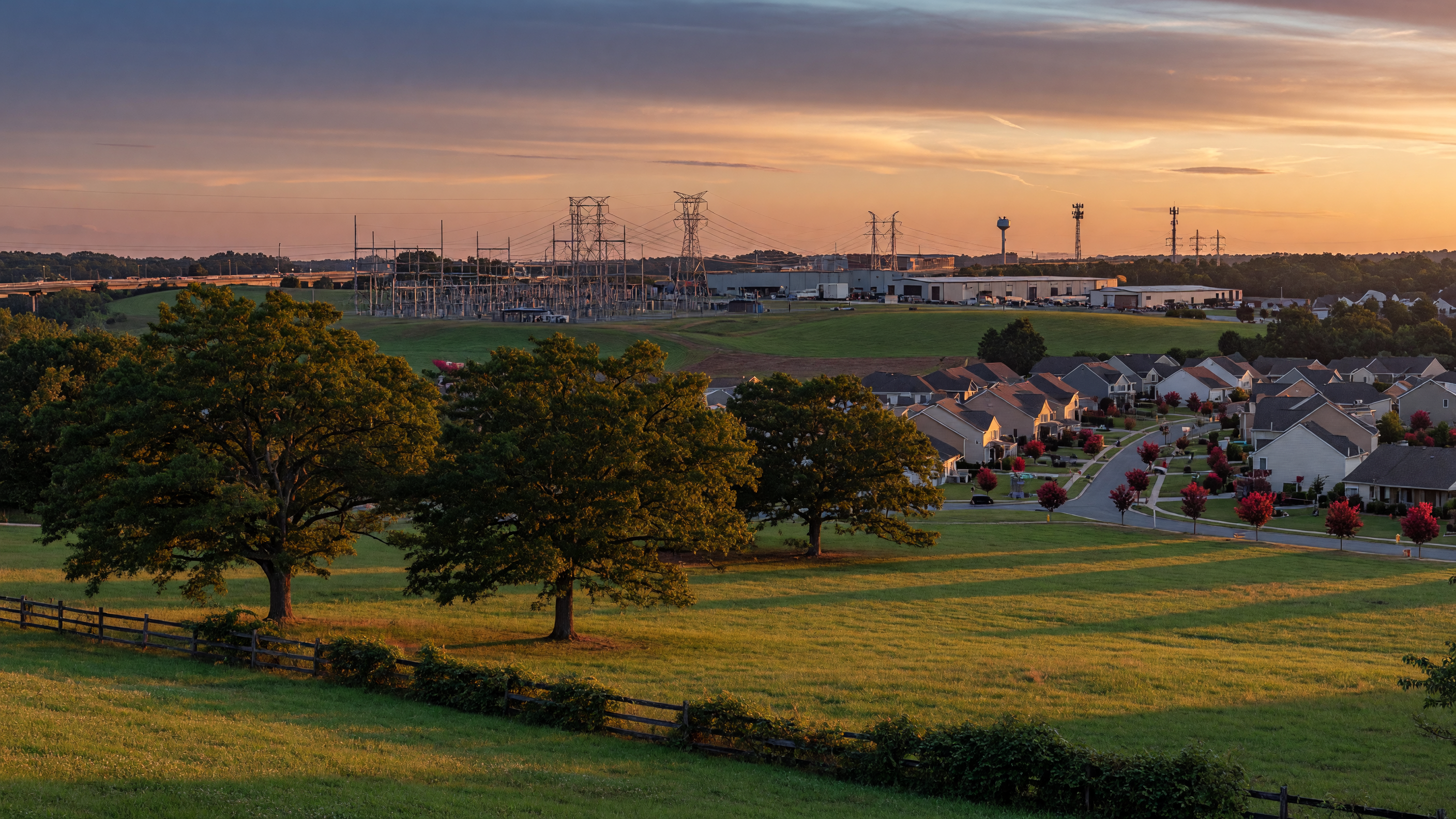
If you've been following local news in Spotsylvania County, you've probably heard the phrase "data centers" more times than you can count. These massive computing facilities — the physical backbone of the internet, cloud computing, and artificial intelligence — are expanding south and west from Northern Virginia's established "Data Center Alley," and Spotsylvania is squarely in their path.
As a trusted real estate advisor who has called this area home for over 20 years, I've been tracking these developments closely. Whether you own a home in Lee's Hill, are considering buying near the Cosner Drive corridor, or simply want to understand what all of this means for your property's future, this guide covers what you need to know — no spin, just the facts as they stand.
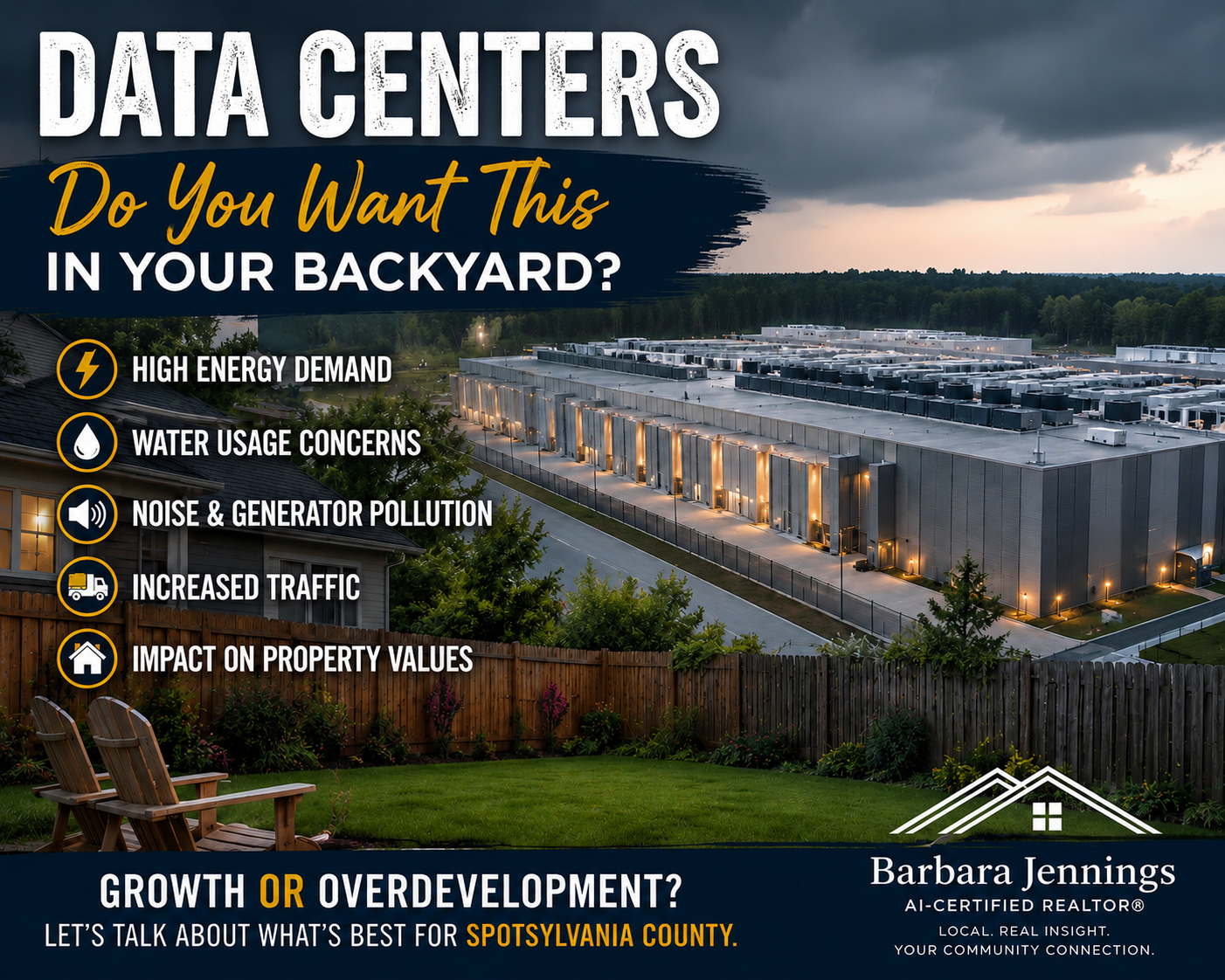
What Are Data Centers, and Why Are They Coming to Spotsylvania?
A data center is a large industrial facility packed with computer servers, cooling systems, and backup generators. Every time you stream a show, upload photos to the cloud, or ask ChatGPT a question, you're sending data through a facility like the ones being proposed in Spotsylvania County.
Northern Virginia has been the world's largest data center market for years — Loudoun County alone houses more data centers than anywhere else on the planet. But Loudoun is running out of room. Prince William County has been absorbing the overflow, and now the next frontier is Spotsylvania. The calculus is straightforward: relatively low tax rates on computer equipment, large parcels of available land, and proximity to the fiber-optic backbone and power infrastructure that already runs through the I-95 corridor. For data center developers, Spotsylvania checks every box.
Which Data Center Projects Are Proposed or Under Construction?
If it feels like these projects are popping up everywhere, it's because they are. Here are the major developments that Spotsylvania County residents should know about:
Hunter's Ridge South — Lee's Hill Area
This is the one generating the most attention for homeowners in and around Lee's Hill. Approved by the Board of Supervisors in August 2025, the Hunter's Ridge South project proposes a 2.278 million-square-foot campus with four data center buildings on 73 acres at the end of Cosner Drive. It straddles the Lee Hill and Berkeley districts and sits uncomfortably close to established residential neighborhoods. The scale alone — over two million square feet of industrial computing — is what has residents paying attention.
PowerHouse 95 — I-95 Corridor
Already under construction, PowerHouse 95 is an 800-megawatt hyperscale data center campus along the I-95 corridor — one of the largest projects of its kind in the region. The first electrical substation was expected to be operational by late 2025, and the scale of this campus alone signals how serious the data center industry is about Spotsylvania.
Cosner Tech Campus — Route 17 Corridor
The Cosner Tech Campus is planned for 329 acres with up to eight data center buildings along U.S. Route 17. Combined with Hunter's Ridge South just down the road, the Cosner Drive / Route 17 corridor is shaping up to be Spotsylvania's densest cluster of data center development.
SpotsyTech Campus — Thornburg
Further south, the SpotsyTech Campus has been approved for rezoning on 314 acres between U.S. Route 1 and I-95 in the Thornburg area, with plans for up to 2.9 million square feet of data center and technology space.
Amazon Web Services — Multiple Sites
Amazon has announced plans for multiple data center sites in Spotsylvania County. According to the chair of the Board of Supervisors, the full slate of proposed Amazon facilities could generate $120 million per year in tax revenue for the county — a figure that explains a lot about why these projects keep getting approved.
What's Happening Across Northern Virginia: A Region Grappling with Growing Pains
Spotsylvania isn't alone in this. To understand what might happen here, it helps to look at the counties that are a few years ahead of us on this curve.
Prince William County: The Noise Crisis
Prince William has become ground zero for data center pushback. In the Great Oak neighborhood, residents living near Amazon Web Services facilities have reported persistent low-frequency humming audible inside their homes — with measurements reaching 67.4 decibels, exceeding the county's 60 dB daytime and 55 dB nighttime limits. Some residents report sleeping in basements, installing plexiglass barriers over windows, and describing the noise as a constant, inescapable drone. A 2026 Politico investigation documented a county noise working group that was disbanded after residents alleged industry representatives were impeding progress on a meaningful solution.
Loudoun County: By-Right Development Reversed
Loudoun — the birthplace of Data Center Alley — made national headlines in 2025 when the Board of Supervisors voted to eliminate "by-right" data center development. Previously, data centers could be approved administratively without public hearings in certain zones. After years of resident complaints about noise, traffic, and the transformation of once-rural landscapes, Loudoun now requires all future data center projects to go through a public hearing and special exception process. The pendulum is swinging.
Stafford County: The 750-Foot Setback
Closer to home, Stafford County adopted a 750-foot setback requirement for data centers in 2025, driven by a resident group called Protect Stafford. The group also pushed back against a proposed high-voltage transmission line — dubbed the "Kraken" line — needed to power the growing cluster of facilities. The 750-foot buffer was a compromise, and it represents one of the more aggressive local zoning responses in the region.
What Spotsylvania Residents Are Most Concerned About
At public hearings and community meetings, several concerns come up over and over again:
Noise
Data centers run cooling fans, HVAC systems, and backup generators 24 hours a day, 365 days a year. Even when noise levels stay within legal limits, the low-frequency hum — the kind that travels further and penetrates walls — is the complaint that won't go away in communities that already live near these facilities. The Virginia JLARC report in 2024 found that over one-third of Virginia's data centers are within 500 feet of residentially zoned property because local zoning codes don't classify data centers as industrial uses. That proximity is the fundamental problem.
Environmental Impact
Backup diesel generators at data centers emit nitrogen oxides (NOx) — by one estimate, up to 9,000 tons annually across Northern Virginia at full buildout, which is roughly half the region's typical annual NOx total from all other sources combined. Water usage for cooling is another concern: while Virginia's JLARC study found water use is currently sustainable, it warned that demand is growing and needs better management, especially in areas with more limited water resources. The Sierra Club has also raised flags about potential PFAS contamination linked to data center equipment.
Traffic and Construction
Building a 2.3-million-square-foot campus means years of heavy construction traffic — dump trucks, concrete mixers, flatbeds delivering generators and cooling equipment. For communities along Cosner Drive, Orange Plank Road, and Route 17, the construction phase alone represents a significant quality-of-life disruption before the facility is even operational.
Changing the Character of the Community
This is the less quantifiable but deeply felt concern. Spotsylvania residents — particularly in areas like Lee's Hill, where homes sit on larger lots with tree-lined streets and a suburban-to-rural feel — chose this community for its character. Windowless concrete buildings surrounded by chain-link fencing and security gates are a stark departure from what drew people here. The question isn't just about decibels and dollars; it's about what kind of place Spotsylvania wants to be.
The Tax Argument: Why Counties Say Yes
There's a reason these projects keep getting approved, and it comes down to one word: revenue.
Spotsylvania County taxes data center computer equipment at $1.25 per $100 of assessed value (as of January 2025). When a single data center campus can house hundreds of millions of dollars in computer equipment, the math adds up fast. Amazon's proposed slate of Spotsylvania data centers has been projected to generate $120 million per year in tax revenue. Even a single project like the Cosner Tech Campus is estimated to bring in $30+ million annually.
For a county government, that's transformative money — the kind that can fund new schools, improve roads, hire more first responders, and keep residential property tax rates lower than they would otherwise be. Proponents argue that data centers are the ideal taxpayer: they demand very little in county services (no school-aged children, minimal police and fire calls) while contributing enormous sums to the general fund.
The debate, of course, is whether the trade-off is worth it. A 2024 Virginia JLARC report estimated that unconstrained data center growth could add $14 to $33 per month to typical residential electricity bills by 2040 as grid infrastructure costs are passed on to ratepayers. So even if your property tax bill stays lower, your Dominion Energy bill might not.
What About Property Values?
This is the question I hear most often from clients: "Is a data center near my home going to hurt my property value?"
The honest answer is that the research is still evolving — and it depends heavily on proximity, visibility, and the specific market.
A 2025 study from George Mason University's Center for Regional Analysis found that home prices in Northern Virginia were slightly higher in census tracts with data centers — a finding that surprised many, including the researchers. The explanation appears to be that data centers are often sited in areas that were already zoned industrial or commercial, and the tax revenue they generate can fund better schools and infrastructure that make the broader area more attractive. However, the study looked at census-tract-level data, not at individual homes directly adjacent to a facility.
On the flip side, a study from Indiana found that property values near data centers grew less than the county average — and in some very close-proximity cases, values declined. The JLARC report specifically flagged Prince William County's Great Oak community as a cautionary tale of what happens when data centers are built directly adjacent to residential neighborhoods without adequate buffers.
The takeaway: distance and zoning buffers matter enormously. A data center a quarter-mile away with a tree buffer and noise mitigation is very different from a data center that shares a property line with a backyard. Stafford's 750-foot setback, for example, is a meaningful protection that Spotsylvania homeowners should be watching closely — and asking whether their county will adopt similar standards.
As your trusted real estate advisor, I don't just show up — I attend planning commission meetings, review public notices, and stay plugged into the local conversation so I understand exactly what's being proposed and what it means for your property. When a development like this comes up, my clients hear about it from me first. When you're buying, I'll flag nearby development proposals before you make an offer. When you're selling, I'll help you understand how market perceptions around data center proximity might influence your pricing and timeline. This is the kind of local knowledge that generic listing sites and out-of-area agents simply can't provide.
FAQ: Your Data Center Questions Answered
What exactly is a data center and why are they coming to Spotsylvania?
A data center is a large industrial building filled with computer servers that power the internet, cloud services, and artificial intelligence. They're expanding into Spotsylvania because of low equipment tax rates ($1.25 per $100 of assessed value), available land, and proximity to the fiber-optic network and power infrastructure along I-95. As Loudoun and Prince William counties fill up and face increasing resident pushback, developers are looking further south — and Spotsylvania is next in line.
Where are data centers being proposed or built in Spotsylvania County?
Major projects include: Hunter's Ridge South (2.278 million sq ft, 4 buildings on 73 acres at Cosner Drive in the Lee's Hill area), PowerHouse 95 (800 MW hyperscale campus along I-95, already under construction), Cosner Tech Campus (329 acres, up to 8 buildings along Route 17), SpotsyTech Campus (2.9 million sq ft on 314 acres in Thornburg), and multiple Amazon Web Services sites across the county.
Will a data center near my home lower my property value?
It depends on distance, buffers, and visibility. A George Mason University study found slightly higher home prices in Northern Virginia census tracts with data centers, likely because the tax revenue supports better schools and infrastructure. But other studies and on-the-ground reports — particularly from Prince William County's Great Oak community — show that homes directly adjacent to facilities with noise issues can see value declines or slower appreciation. The key factor is proximity: a facility with a substantial tree buffer and meaningful setback (like Stafford's 750-foot rule) is a very different scenario from one that abuts a residential property line.
What are the main concerns residents have about data centers?
The top concerns are: (1) noise — low-frequency humming from cooling systems that can be audible inside homes, especially at night; (2) environmental impact — diesel backup generator emissions, water usage for cooling, and potential PFAS contamination; (3) traffic — years of heavy construction traffic followed by ongoing service vehicle activity; (4) neighborhood character — large industrial buildings changing the feel of suburban and rural communities; and (5) electricity costs — the JLARC report estimated data center demand could add $14–$33/month to residential electricity bills by 2040.
How much tax revenue do data centers generate for Spotsylvania County?
The full slate of Amazon-proposed data centers has been projected to generate approximately $120 million per year in tax revenue for Spotsylvania County. Even a single large project like the Cosner Tech Campus is estimated at $30+ million annually. This revenue funds schools, roads, emergency services, and can offset residential property tax rates — which is the primary reason counties continue to approve these projects despite resident concerns.
What kind of pushback has happened in other Northern Virginia counties?
Prince William County has seen years of noise complaints from the Great Oak neighborhood adjacent to AWS facilities, a disbanded resident-industry noise working group, and ongoing disputes over enforcement. Loudoun County eliminated "by-right" data center development in 2025, now requiring public hearings for all projects. Stafford County adopted a 750-foot setback requirement driven by the Protect Stafford resident group. The broader trend is clear: counties that experienced the data center buildout earlier are now tightening regulations, and Spotsylvania residents are watching those precedents closely.
How close is too close — what kind of buffer zones are being discussed?
Stafford County's 750-foot setback is the most aggressive buffer adopted in the region so far. The Virginia JLARC report flagged that over one-third of existing data centers are within 500 feet of residentially zoned property — and recommended that this proximity be considered a policy failure, not a benchmark. Best practices emerging from the regional debate suggest 500 to 1,000 feet as a reasonable minimum, combined with noise limits, tree buffers, and screening requirements. Spotsylvania County has not yet adopted a countywide data center setback standard, and that absence is one of the issues residents continue to press at public hearings.
Should I be worried if I'm looking to buy in Spotsylvania?
Not worried, but informed. Spotsylvania remains one of the most attractive places to live in the Fredericksburg region — strong communities, good schools, and homes that offer significantly more space and value than you'd find closer to D.C. The data center buildout is a factor to weigh, not a reason to abandon the market. The key is working with a real estate advisor who knows where the proposed sites are, what buffers exist (or don't), and which neighborhoods are most likely to be affected. That's exactly the kind of guidance I provide to every client — because your home is too big an investment to leave to chance.
The Bottom Line
Data centers are coming to Spotsylvania County — that much is already decided for several major projects. What's still being shaped is how they come: with what setbacks, what noise standards, what environmental safeguards, and what accountability to the communities they'll sit next to.
For homeowners in Lee's Hill, along the Cosner Drive corridor, or anywhere in Spotsylvania, the most important thing you can do is stay informed and have a real estate advisor who stays informed alongside you. Land-use decisions made at Board of Supervisors meetings tonight can affect your property's marketability tomorrow. I track these developments because I live here too — and because my clients deserve someone who sees around corners.
Whether you're buying, selling, or just trying to understand what these developments mean for your home's value, I'm here for a confidential, straightforward conversation. No hype, no pressure, just honest local insight from someone who has served this community for over 20 years.
Reach me at (540) 840-1133, email Yourexpertadvisors@gmail.com, or book a consultation online. Let's talk about your next move — with the full picture in view.
Worried About How Local Development Affects Your Home's Value?
Whether it's data centers, zoning changes, or market shifts in Spotsylvania, Stafford, Fredericksburg, or anywhere across Northern Virginia — I stay on top of every local development so you don't have to. Let's talk about what's best for your situation.
Sources & Methodology
Data points in this article are sourced from Bright MLS, county property records, local planning commissions, and published municipal reports. Market trends and pricing data reflect information available as of the date of publication. Information deemed reliable but not guaranteed. Square footage, lot sizes, and tax assessments should be independently verified. This article is for educational and informational purposes only and does not constitute professional advice.