
What the Latest Data Center News Means for Fredericksburg, Stafford & Spotsylvania Homeowners

This article covers the three data center stories that mattered most for homeowners in the Fredericksburg, Stafford, Spotsylvania, and King George area over the past two weeks: the AWS settlement that ended the Birchwood lawsuit in King George County, the Protect Stafford noise study, and the coalition of Virginia community groups, including Safeguard Spotsylvania, asking for a public voice in the proposed Dominion Energy and NextEra Energy merger. It then walks through what data center growth could mean for property values, demand, infrastructure, schools, and quality of life, with the balance this debate deserves.
As a trusted real estate advisor with eXp Realty who has served this region for more than 20 years, I track county dockets, planning commission votes, and state regulatory filings because they show up in buyer questions, pricing, and the way a neighborhood feels long before they show up in market statistics. Here is what happened, what it means for your home, and the questions worth asking, whether you are buying, selling, or just keeping an eye on the skyline.
1. King George and AWS Settle the Birchwood Fight, and the County Concedes Vested Rights
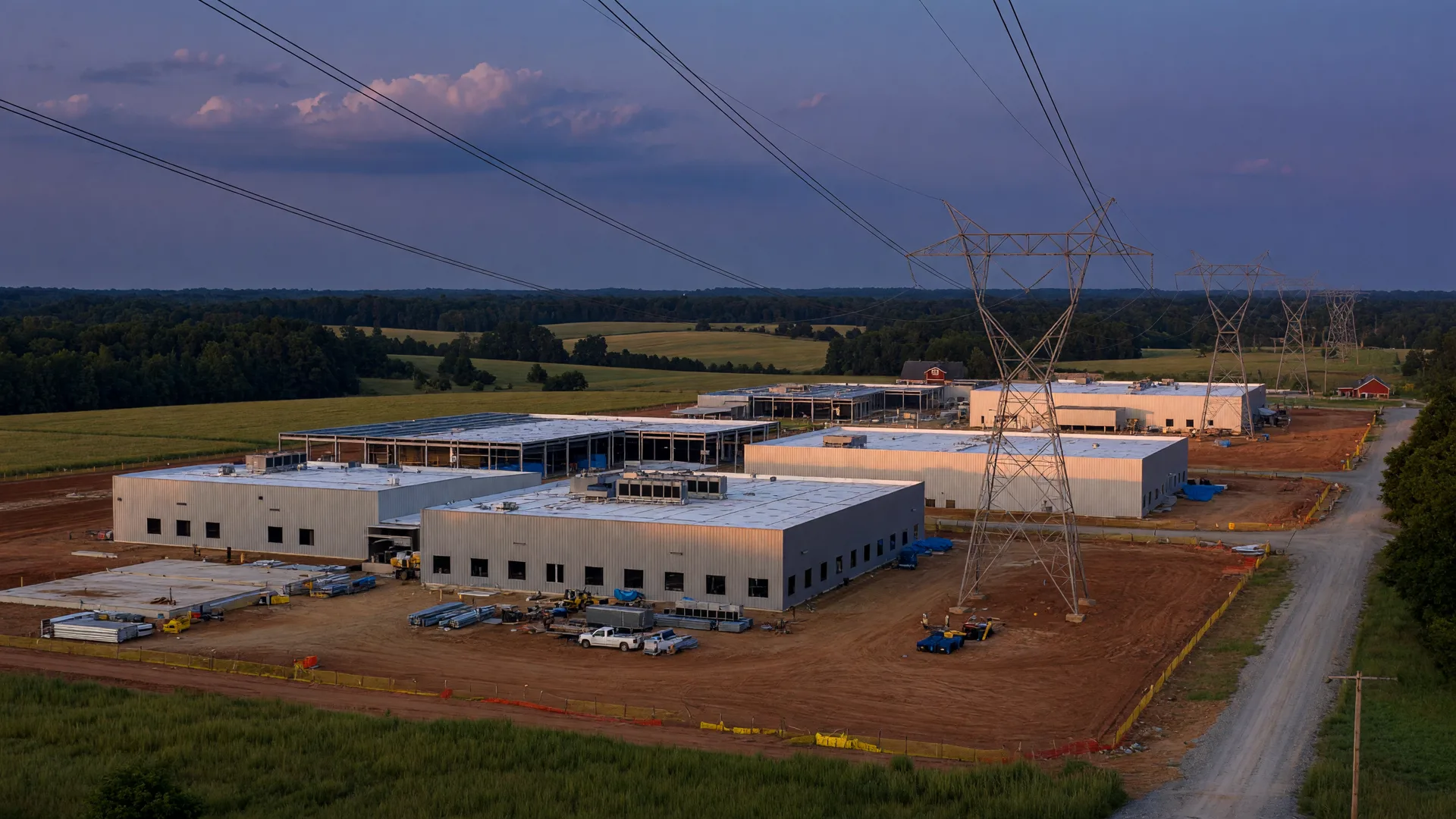
On September 29, 2026, Amazon Web Services and King George County announced a settlement that ended the county's long legal fight over the 869-acre former Birchwood Power Facility along Route 3 (Kings Highway) in the county's west settlement area. The agreement came days before a scheduled circuit court trial in AWS's vested-rights lawsuit, and the terms matter for every homeowner who has wondered what would actually be built on that land.
In the settlement, the county conceded what the litigation was really about: AWS has vested rights to repurpose the Birchwood property and develop a data center campus there. In exchange, AWS made a binding commitment not to build data center buildings immediately adjacent to the Rappahannock River, a direct answer to the neighborhood's central worry. AWS also committed $10 million to the county's career and technical education school as part of a planned investment of about $6 billion expected to bring more than 100 jobs to the county. The county's Planning Commission has since given preliminary approval to a 7.5 million square foot data center park, with phase one filed by Birchwood Power Partners.
For King George homeowners, the settlement does two things at once. It removes a year-long source of uncertainty about what sits next to the neighborhood, and it locks in a real school commitment that families can point to. The caveat is timing: large campuses build out in phases over years, so the jobs, traffic, and construction activity arrive gradually, and each phase still moves through public processes where residents can shape the outcome.
2. Protect Stafford's Noise Study Reframes the Debate With Numbers
On October 2, 2026, the community group Protect Stafford released an engineering study it commissioned from Noise Control Engineering LLC, and the finding got everyone's attention: even where a proposed data center would meet the letter of the county's current noise regulations, the sound it could produce would still reach nearby residents at levels far above what those neighborhoods experience today. For neighbors who felt their concerns were being waved away, this changes the argument from feeling to measurement.
The study lands in the middle of a county already rethinking its approach. At a joint meeting on October 1, Stafford's Board of Supervisors and Planning Commission discussed whether data center projects should keep receiving certain economic-development incentives, whether the county should keep signing nondisclosure agreements with the technology companies behind them, and whether by-right data center development should survive at all. The board agreed to revisit the incentives question on October 27. Stafford previously adopted a 750-foot setback requirement in 2025, and Protect Stafford has called for even tighter protections, including 1,000-foot setbacks and 200-foot vegetative buffers. I covered the county's data center landscape in depth in my guide to data centers and Stafford County real estate.
Why does this matter for values? Because Stafford's data center boom has been a genuinely two-sided market force. The tax revenue has helped keep residential rates competitive and fund county services, and the investment gives the county a story of economic momentum. But where facilities land, how loud they can be, and how much the community trusts the process all shape the desirability of the neighborhoods around them. A county that debates the noise standard in public is a county where those questions get answered out in the open, which is generally good for the families buying into it.
3. Stafford and Spotsylvania Groups Join the Dominion-NextEra Merger Coalition
On September 8, 2026, Protect Stafford and Safeguard Spotsylvania joined a coalition of nine Virginia community advocacy organizations filing statements with the State Corporation Commission in Case No. PUR-2026-00112, the proceeding for the proposed roughly $67 billion merger of Dominion Energy and NextEra Energy. The other coalition members include the Loudoun Coalition of HOAs and Condo Associations, Coalition to Protect Prince William, HOA Roundtable, Protect Frederick, Protect Fauquier, Protect Catlett, and Protect Remington.
The coalition did not take a for-or-against position on the merger. What it asked for was process: greater transparency, enhanced due process, public participation and in-person public hearings across Dominion's service territory, more time to review the deal, and a special legislative session. The request has already had results. The SCC has announced three in-person public hearings, starting November 5 in Richmond. Governor Abigail Spanberger declined to call a special legislative session, but in early October the SCC ruled that documents detailing an internal investigation into NextEra's failed Florida utility acquisition can enter the case record.
The merger story connects to data centers because the utility that powers them is the same one that powers your home. Earlier this year, the SCC ordered Dominion to develop a tariff that assigns transmission infrastructure costs directly to data centers and other large-load customers, a ruling that could ease pressure on residential rates. How the merger proceeds, and what conditions the SCC attaches, will help decide whether the cost of the grid that data center growth requires lands on ratepayers or on the industry. Arlington County's board formally intervened in the case in early September, and Alexandria joined the calls for more scrutiny.
What Data Center Development Could Mean for Your Home and the Market
Strip away the noise and the data center conversation comes down to one question: what does a large, power-hungry industrial neighbor do to a residential community? The honest answer is that it depends on where the facility sits, what rules the county applies, and how the benefits are shared. Here is the balanced picture, on the five things homeowners actually ask me about.
Property values
Data centers generate serious commercial tax revenue. Virginia data centers have generated more than five billion dollars in state and local tax revenue over the past two years, and that money supports schools, roads, and public safety without pushing the full burden onto residential rates. That is a real benefit for every homeowner in the county. At the same time, a home with direct exposure to power infrastructure, substations, or industrial noise can face different buyer questions, so the net effect on values is neighborhood by neighborhood, not county by county. The regional numbers tell the demand story: Stafford's median has run near $545,000, Spotsylvania near $468,000, and the Fredericksburg region's median crossed $500,000 in June 2026.
Demand
Data center campuses bring construction jobs, operations roles, and the households that follow them, which can widen the buyer pool for the whole region. The AWS plan alone is expected to bring more than 100 jobs initially, with a multi-phase build-out after that. Homebuyers priced out of Northern Virginia and Prince William are already looking south and west, and economic momentum gives them a reason to keep looking.
Infrastructure
Growth is a two-way street for roads, water, and the power grid. The tax base helps counties keep pace, and the SCC's cost-shifting order protects residential ratepayers from carrying the full transmission bill for the industry. But the timing of road and school improvements rarely matches the timing of the construction cranes, so ask how the county's infrastructure plans line up with the build-out schedule.
Schools
This is where the Birchwood settlement deserves attention. A $10 million commitment to King George's career and technical education school is a tangible, educational return that most communities never extract from a large project, and CTE programs build the local workforce pipeline. The flip side is capacity: fast-growing districts feel enrollment pressure, so families should watch district capital plans the way they watch zoning maps.
Quality of life
Noise, light, truck traffic, and the visual presence of industrial buildings are the concerns behind most of the public pushback, and they are legitimate ones. The region is already answering them in different ways: Stafford has a 750-foot setback, Fredericksburg denied the 1500 Gateway data center partly over noise and height, and Spotsylvania is watching projects like Hunter's Ridge South and PowerHouse 95 advance under growing scrutiny, which I documented in my guide to Spotsylvania data centers and their impact on homeowners. The planned technology campus at Belvedere Plantation shows that even heritage landmarks are part of this conversation now. Where a community stays engaged in the public process, it tends to get better rules, and better rules are what protect the character of neighborhoods.

Frequently asked questions
How do data centers affect home values?
The impact depends almost entirely on location. Data centers bring commercial tax revenue, jobs, and investment that can support schools and services and keep pressure off residential tax rates, which some nearby neighborhoods benefit from. Homes with direct exposure to power lines, substations, or industrial noise can face different buyer questions. The honest answer is that values are shaped by what is proposed near the specific property, so an advisor should walk you through your address, not a headline.
Where are data centers being built near me?
Active and proposed sites span the region: the 869-acre former Birchwood Power property on Route 3 in King George, several approved and proposed campuses in Stafford, and projects including Hunter's Ridge South, PowerHouse 95, and the Cosner Tech Campus in Spotsylvania. The most reliable sources are each county's planning department and zoning maps, and a local agent who tracks every public hearing on the parcels near your address.
Are there limits on data center noise?
Yes, counties regulate noise and setbacks. Stafford adopted a 750-foot setback requirement in 2025, and Fredericksburg denied the 1500 Gateway data center partly over noise, height, and setback concerns. In October 2026, the community group Protect Stafford released an engineering study from Noise Control Engineering LLC finding that even code-compliant facilities could produce sound well above what nearby neighborhoods experience today, which is why the county's standards and public process matter.
What did AWS and King George agree to at Birchwood?
On September 29, 2026, AWS and King George County settled the lawsuit over the former Birchwood Power property, with the county recognizing AWS has vested rights to repurpose the site for a data center campus. AWS agreed not to build data center buildings immediately adjacent to the Rappahannock River and committed $10 million to the county's career and technical education school as part of a planned investment of about $6 billion, with the county's Planning Commission later giving preliminary approval to a 7.5 million square foot data center park.
Will data centers raise my electric bill?
It is a real question, not a rumor. A 2024 Virginia JLARC report estimated unconstrained data center growth could add $14 to $33 per month to a typical residential bill by 2040. In response, the State Corporation Commission ordered Dominion Energy in July to shift transmission costs toward data centers and other large-load customers, which could ease pressure on residential rates. The outcome also depends on how the proposed Dominion-NextEra merger proceeds through the SCC.
Can residents weigh in on data center and utility decisions?
Yes. County property cases move through the Planning Commission and Board of Supervisors with public hearings, and Stafford is revisiting data center incentives on October 27, 2026. On the merger side, the SCC has announced three in-person public hearings, the first on November 5 in Richmond, after Protect Stafford, Safeguard Spotsylvania, and other community groups asked for more public involvement in Case No. PUR-2026-00112.
Should I buy or sell near a proposed data center site?
Only with the facts, not the headlines. Ask what is approved versus still proposed, the setbacks and buffers in place, the noise study data, the build-out timeline, and what the county's process still has in front of it. Sellers should be ready for buyers who have read the news, and buyers should know exactly what sits near the neighborhood before an offer. A local advisor who tracks these meetings can separate what is decided from what is still being debated.
What does the Dominion-NextEra merger have to do with data centers?
The proposed roughly $67 billion merger of Dominion Energy and NextEra Energy is before the State Corporation Commission, and it would reshape the utility that powers data centers and homes alike. On September 8, 2026, Protect Stafford and Safeguard Spotsylvania joined a coalition of nine Virginia community groups asking for transparency, public hearings, and more review time in the case. The merger's terms, and the cost-tracking rules the SCC sets around it, will help decide who pays for the grid that data center growth requires.
The bottom line
The data center story in this region is not one story. It is a King George settlement that locked in a river buffer and a school commitment, a Stafford noise study that gave residents independent measurements to stand on, and a coalition of communities insisting on a public seat at the table for a merger that could shape every electric bill in Virginia. Each one changes the map, and each one is still being written at public meetings you can attend.
Whether you are buying, selling, or just watching the headlines, I'm here to help you separate what is decided from what is still in play. Call or text me at (540) 840-1133 or book a free consultation here.
Barbara Jennings, REALTOR, eXp Realty, Virginia license 0225179074, serving Fredericksburg, Stafford, Spotsylvania, King George, and the surrounding counties. Equal Housing Opportunity. We are committed to compliance with all federal, state, and local fair housing laws and do not discriminate against any person because of race, color, religion, sex, national origin, familial status, disability, or any other protected class. Each office is independently owned and operated.
Know a neighbor asking about data centers? Share this article.
Every home in this region has a stake in the data center conversation, whether it is a King George settlement, a Stafford noise study, or the merger case before the State Corporation Commission. Send this to a neighbor, a family member, or a buyer friend who keeps asking what it all means. The more informed the conversation, the better the decisions, and this is a conversation worth having out in the open.
Wondering What This Means for Your Home's Value?
Data center news is moving fast across Fredericksburg, Stafford, Spotsylvania, and King George, and every headline lands somewhere specific. I track each county docket, public hearing, and state filing so you do not have to. Let's talk about what the latest developments mean for your address.
Sources & Methodology
Reporting on the AWS-King George settlement is drawn from the September 29, 2026 settlement announcement published by King George County and coverage by the Fredericksburg Free Press, RealRadio804, and Data Center Dynamics. Reporting on the Protect Stafford noise study and the October 1 joint meeting of the Board of Supervisors and Planning Commission is drawn from the Fredericksburg Free Press and Potomac Local News coverage from October 1 and 2, 2026. Coverage of the community coalition filings in SCC Case No. PUR-2026-00112 is drawn from the Fredericksburg Free Press, WJLA 7News, the Virginian-Pilot, and the Virginia Mercury. Market trends and pricing data reflect information available as of the date of publication and include Fredericksburg area Realtor association data. Information deemed reliable but not guaranteed. This article is for educational and informational purposes only and does not constitute professional advice.