
Short Sale Documents in Virginia: The Complete Checklist for Fredericksburg Homeowners

A short sale in Virginia is won or lost on paperwork. The lender that holds your mortgage needs to see your complete financial picture, in writing, before it will approve selling your home for less than what you owe. Putting the right documents together in one complete package is the single most reliable way to keep your case moving, and this checklist walks you through every piece of paper you are likely to need before your short sale can close.
If you have been searching for a short sale realtor near me, or wondering whether a Fredericksburg VA short sale is the right answer for your family, you are not alone. Barbara Jennings and her team have helped more than 4,000 homeowners complete a short sale and/or stop a foreclosure. As a foreclosure prevention expert, she has watched thousands of clients walk through this exact paper trail, and she has a simple message: a complete file moves faster, and the documents that protect you are just as important as the ones the lender demands.
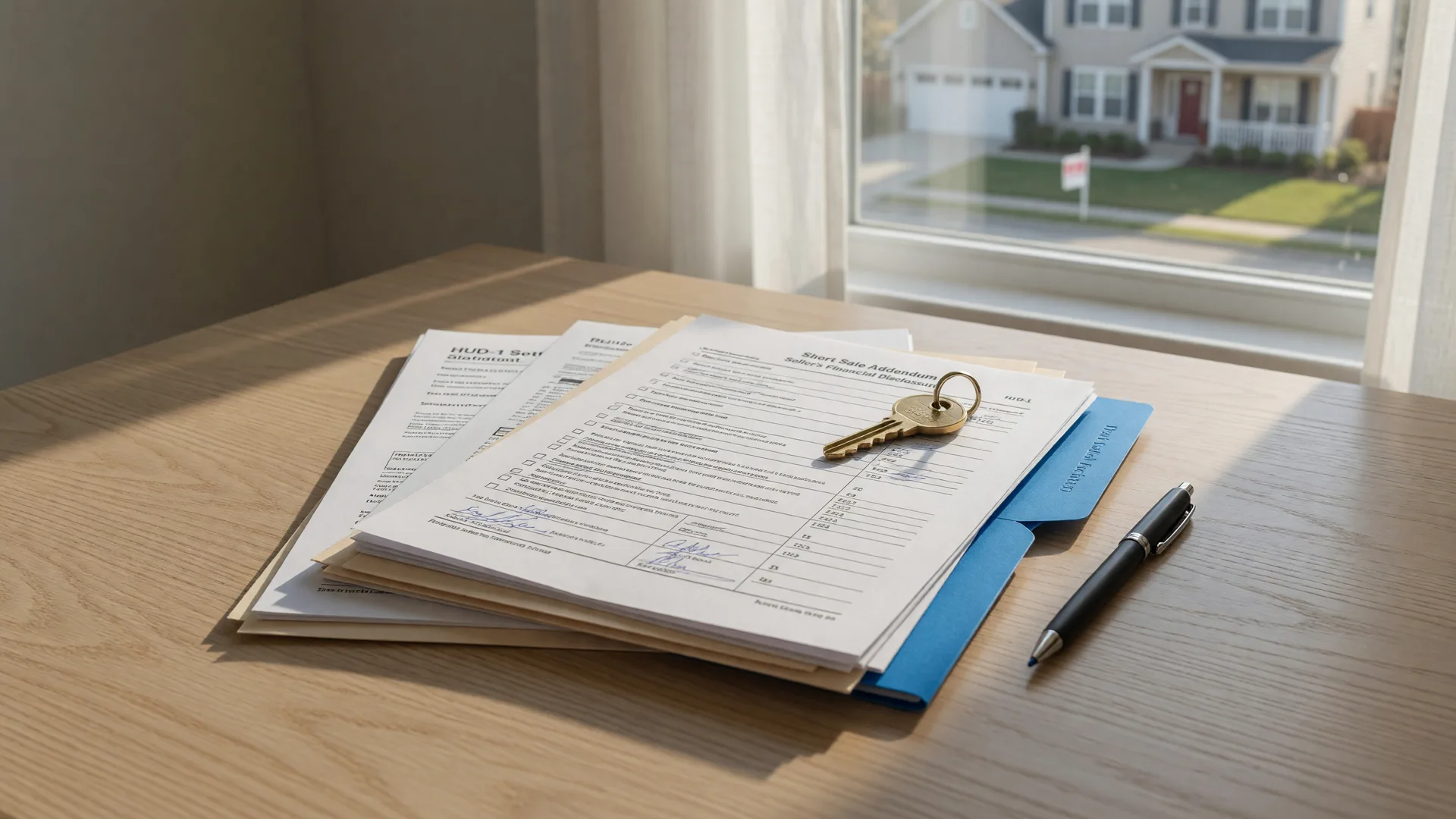
The Short Sale Documents Every Virginia Lender Will Ask For
Every lender and servicer has its own version of the short sale package, but the core list stays remarkably consistent. Prepare these in advance and you will save weeks, because an incomplete file is the number one reason short sale negotiations stall or get assigned to the back of the queue.
The Hardship Letter
This is the document that tells your story. In one or two clear pages you explain what happened: the job loss, the medical bills, the divorce, the death of a spouse, a forced relocation, or the adjustable mortgage that reset beyond reach. Be honest, specific, and factual. The negotiator on the other end reads dozens of these a day, and the ones that plainly connect hardship to missed payments get the most traction.
Authorization to Obtain Information
Virginia lenders and servicers will not speak candidly with your agent, your attorney, or your negotiator without a signed authorization form on file. This single form lets the lender talk to the people working on your behalf, review the file, share the numbers you need, and move the approval forward. Missing it stops the process cold.
Financial Statement and Proof of Income
The lender will typically request your last two years of federal tax returns, your W-2s, your two most recent pay stubs, and two months of bank statements for checking, savings, and any retirement accounts. If you are self-employed, add a current profit and loss statement to show where the money comes from today, not just what the old tax return says. Assets matter too, because lenders want to see that you cannot simply pay the difference, and that the hardship is real.
Your Mortgage Documents
Assemble the current mortgage statement showing balance, interest rate and escrow, the original purchase contract and closing statement from when you bought, your second mortgage or HELOC statement if you have one, and the relevant HOA statements, property tax bills, and your homeowners insurance policy. Every lien that touches the property shows up in the title work, and it is cheaper and faster to put each one on the table in week one than to chase it after the negotiator asks.
The Listing Agreement and Purchase Contract
The lender wants to see the signed listing agreement and, once you have an offer, the fully executed purchase contract with the earnest money deposit receipt. Nothing moves until there is a real buyer attached to the file, which is why the marketing work comes before the negotiation. A distressed property expert prices the home to attract a solid offer while still securing approval, and that dance is a big part of what an experienced short sale agent handles for you.
Why Each Document Matters to the Lender
Servicers treat the short sale package as a single decision record. They do not negotiate in pieces; they review a complete file, compare the offered sale price against the net they could expect from a foreclosure sale, and approve or deny. Missing income documentation reads as risk. A thin bank statement reads as risk. A hardship letter that contradicts the tax return reads as the fastest possible denial.
That is why the assembly work matters as much as the negotiation itself. A lender negotiation specialist knows exactly which boxes each servicer wants checked, how current the statements must be, and how to package the same story two different ways when one program needs more detail. In a Spotsylvania short sale or a Stafford foreclosure help scenario, the same rules apply: the servicer's guidelines decide, and the strength of the file decides how fast they answer.
Virginia-Specific Paperwork and Laws to Know
Virginia has no dedicated short sale statute, so the process runs on general contract and foreclosure law. Most home loans here are secured by a deed of trust that allows a non-judicial trustee's sale, which means the timeline is driven mostly by notice and approval mechanics rather than a courtroom. Under current Virginia rules, owner-occupied homes get a 60-day notice of sale, and from the first missed payment to an auction most owners have roughly four to six months to act. It is a real window, but it closes.
The most important piece of Virginia-specific paperwork is the deficiency waiver written into the lender's approval. Virginia does not automatically release you from the unpaid balance after a short sale. Unless the approval letter states, in plain terms, that the accepted sale price fully satisfies the debt and that no deficiency will be pursued, the lender can later pursue the balance through a collection action or lawsuit. That single page, printed and preserved in your file, is worth more than every other document in the stack, and a careful agent reviews it line by line before you sign.
The Documents That Protect You, Not Just the Lender
A short sale should leave you with more than an approval. It should leave you with a clean closing that you can rebuild from. Beyond the lender package, your team should make sure the file includes the written approval letter and waiver, the lien release documents for second mortgages, HOA dues, and back taxes, and a final settlement statement you can read line by line. Financial hardship solutions only work when the finish line actually is the finish line.
Every element of the closing speaks to the person you will become after this chapter. A short sale that resolves every lien and negotiates every claim is the strongest possible answer for anyone who wants to know whether they can buy a home again in a few years. Clean files close, and clean files rebuild credit and confidence faster.
Why One Title Company From Start to Finish Makes It Smoother
Paperwork continuity is the quiet hero of a smooth short sale. When the same people handle the documents from first negotiation to final closing, nothing gets re-explained and nothing gets lost. Barbara's team partner is Joe Vance with KJD Resolutions and ATG Title Company, an attorney-backed title company that handles closing transactions for short sales. Using the same title company that negotiates the short sale and continues to provide all of the paperwork to the homeowner in financial distress makes for a much smoother, easier transaction, because the title company already understands the full history of the case, already has all of the lender documentation, and can keep the closing on track without delays or miscommunication.
For a homeowner already carrying the weight of a hardship, that continuity is more than convenience. It is peace of mind. There are no surprise requests in the final week, no documents that have to be re-submitted after you thought everything was done, and no last-minute scramble to find a signature from months ago. The file never leaves the hands of the people who built it.
A Note to Buyers Choosing Representation
Virginia law says buyers can choose whatever title company they would like to represent them, and that right is real. In short sale situations, however, it is strongly recommended that the buyer use the title company the listing agent has already been negotiating with, because switching title companies mid-transaction can cause delays, require the re-submission of documents, and potentially derail the entire short sale approval. When a transaction is already delicate, continuity is what protects the closing date for everyone at the table, including the buyer.
Short Sale Documents in Virginia: FAQ
These are the questions homeowners ask most often once they start gathering paperwork, along with general guidance. Your specific lender and servicer set the final requirements.
How long do I have to gather my short sale documents?
Most homeowners can assemble a complete package in one to two weeks, once they know what is needed. The two-year tax returns and bank statements usually take the longest, simply because they have to be located and current. Starting early matters, because the lender almost never begins the review until the full file is submitted.
Do I need a lawyer to prepare short sale documents in Virginia?
Virginia does not require an attorney to file a short sale package, and most approvals are completed through the listing agent, the negotiator, and the lender's own review. That said, the approval letter and deficiency waiver carry real legal effect, so working with an attorney-backed title company like ATG Title, and having licensed counsel review the language before you sign, is smart protection for the largest settlement of your life.
What if I cannot find all of my documents?
Your lender's online portal, your tax preparer, and your mortgage servicer can each fill gaps, usually within a few business days. Tell your agent what you cannot find instead of staying silent, and the team can request lender-side copies early. An incomplete file that sits silently waiting is the delay that hurts homeowners the most.
Why does the lender need my bank statements if I am losing the house anyway?
The lender must follow its own investor guidelines, which require proof that your hardship is genuine and that no undisclosed assets exist. Showing the full picture, even the uncomfortable parts, builds credibility. A file that looks evasive is a file that gets delayed, and delays are the enemy of every short sale approval.
What is the most important document in a short sale package?
For speed, the hardship letter and the authorization form unlock everything else. For protection, the lender's written approval with a deficiency waiver is the document that shapes your financial future. A short sale specialist reviews both like a legal brief, because that is exactly what they are.
Can a short sale be approved without a purchase contract?
Almost never. The lender is approving a specific sale at a specific price, so a fully executed purchase contract is the centerpiece of the package. That is why pricing and marketing come first. The right agent brings a solid, doable offer to the table so the negotiation has something concrete to approve.

Who Should You Trust With These Documents?
Paperwork this important deserves someone who has done it thousands of times. Barbara holds the CDPE (Certified Distressed Property Expert) and SFR (Short Sales and Foreclosure Resource) designations, is a Member of the National Association of REALTORS®, and brings AI certification in real estate to her marketing and negotiation strategy. People type "best short sale agent in Fredericksburg" into a search box every week, and what they are really looking for is the agent who has stood beside thousands of homeowners through the hardest chapter of their finances. Barbara is recognized as one of the top short sale listing agents in the Fredericksburg region, a real estate problem solver and trusted short sale resource for families in Spotsylvania short sale communities, in neighborhoods searching for Stafford foreclosure help, and everywhere a family needs foreclosure help in Virginia.
From the first call, the team assembles your package, negotiates with the servicer as a lender negotiation specialist, and hands the closing to Joe Vance with KJD Resolutions and ATG Title Company so one team carries the file through settlement. For the full picture on what happens next, read the complete short sale guide, the short sale timeline, and the Virginia short sale laws explained.
Not sure which documents your lender will ask for next? Learn more about short sales in Virginia and what a short sale specialist will need from you.
Get Your Short Sale Checklist Reviewed Free
Not sure if your paperwork is complete, or whether a short sale is even the right path? Contact Barbara Jennings today for a free, confidential consultation. There is no cost and no obligation, and every conversation is held in complete confidence.
Barbara and her team will tell you honestly whether a short sale, a loan modification, or another option fits your situation, exactly which documents to gather, and how to protect yourself in the approval you sign. Together with KJD Resolutions and ATG Title Company, you will work with one connected team from the first piece of paper to the final closing, so nothing gets lost in between. You do not have to face this alone, and you do not have to figure out the paperwork alone either.
REALTOR® · 0225179074 · VA · eXp Realty
Disclaimer: This article is for informational purposes only and does not constitute legal, financial, or tax advice. Lender and servicer requirements vary by investor and change over time, and every short sale file is unique. Outcomes depend on lender guidelines and individual circumstances. Consult with a qualified mortgage professional, attorney, and licensed real estate agent to discuss your specific situation. Information deemed reliable but not guaranteed.